Evidence-led, but not academic.

Leadership work built on evidence, not abstraction.

Leadership behaviour shapes performance, adaptability and risk. For sixteen years, APSI has advised FTSE 100 boards and their international equivalents across Europe, APAC and the Americas.

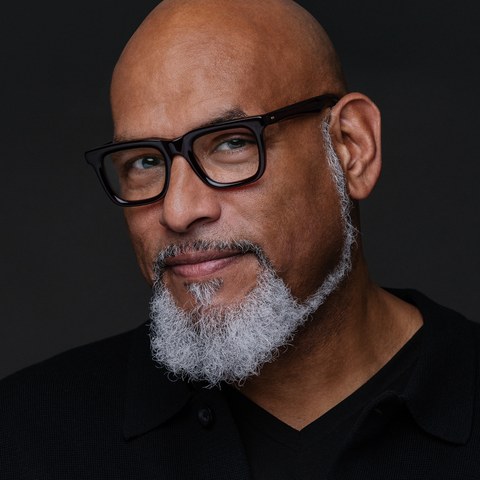
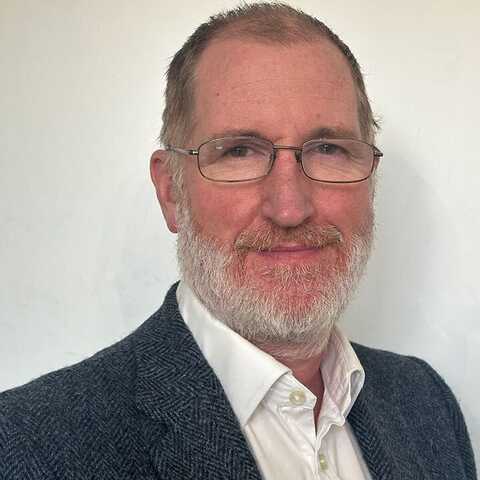
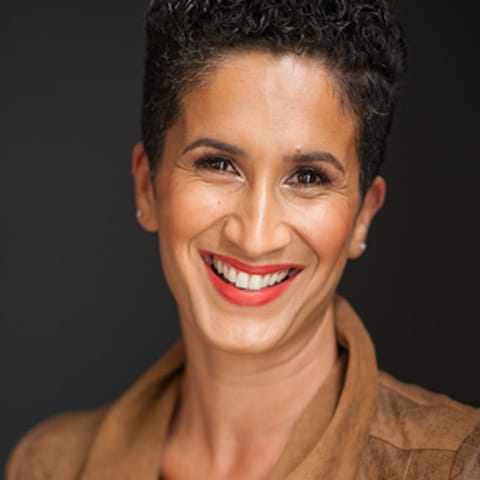
Professor John Amaechi OBE, studio portrait
+84
5-year NPS average
16
Years of practice
4
Continents of delivery
FTSE 100
Boards and global enterprise
Why APSI

What makes APS Intelligence different

Most consultancies sell vocabulary. They turn up with a deck of values, a refresh of the culture statement, and a sequence of workshops that update the language faster than they update what people do. We work the other way. Behaviour comes first, and language catches up.

The manager layer is where strategy meets daily reality. Most programmes treat managers as recipients of skill. However, for programmes and skills to succeed, the manager layer needs authority, capacity, and supportive conditions.

Professor John Amaechi OBE is an organisational psychologist and CIPD Chartered Fellow with sixteen years advising FTSE 100 boards and their international equivalents, including Fortune 100 and global enterprise, across Europe, APAC and the Americas. He also holds the public standing to tell senior leaders what most other advisors won't.

Alongside him is a team of carefully selected associates. We don't hire freelance mercenaries engagement by engagement. We find our associates over time, vet them rigorously, and align them with our methodology before they sit alongside any client. Their backgrounds include extensive military careers, international leadership across multiple continents, and practitioner experience across financial services, professional services, technology, and retail. They're evidence-led without being academic, and our clients get the same consistent service and pragmatic quality no matter which APSI consultant is in the room.

APSI recommends working with both leaders and managers, in whichever order the organisation can sustain. Ideally, we begin with senior leadership, as this establishes the conditions for managers to thrive. When engagements start at the manager layer, we deliberately use what surfaces there to bring senior leadership into the intervention.

Then there's what we won't take on. We turn down work that lacks a theory of change or a realistic mechanism to deliver a return on the investment, even when the intervention is fashionable or other firms are happily selling it. We protect confidentiality as a condition of trust, which is why we don't name many of our strongest engagements on this site. The named testimonials (JLL, Tesco, Jefferies, Kantar, Supercell) are a representative slice of excellence, not the full pattern.

If you're choosing between firms, the question worth asking each of them is what they refuse to do. The answers are usually telling.

What We Do

How we work with you

Our purpose is to reduce resistance and help clients realise their winning edge by delivering evidence-based multidisciplinary excellence. We meet you at your starting point and design the most effective and right-sized solution.

APEX is our on-demand, high-context leadership partnership for executives navigating complexity, transformation, and pace. It provides support that goes far beyond scheduled sessions, embedding insight into the rhythms and realities of how an organisation actually operates.

APEX isn't a programme you sign up to. It's a partnership shaped around the outcomes that matter most to your organisation: deeper insight, stronger leadership, real behavioural change, and meaningful learning opportunities.

Embedded in the system, independent of its constraints.

Five things APEX gives you

Immediate access

On-demand availability when the moment matters most.

High-context insight

Deep understanding of your organisation, culture and politics.

Confidential space

A trusted thinking partner outside the organisational hierarchy.

Clarity in high-stakes moments

Sharper thinking when pressure and complexity converge.

Confidence in decisions

Evidence-informed challenge that strengthens your judgement.

Traditional L&D vs APEX
Traditional L&D
APEX
Access
Monthly scheduled sessions
On-demand, not monthly. Virtual often same day. In-person within hours domestically, 36 hours internationally
Scope
Individual leader, isolated 1:1
Systemic. Works across the leadership tier and selected key stakeholders
Context
Limited to what the coachee shares
Embedded in your organisation. Sees the dynamics and habits that shape decisions
Dialogue
Structured frameworks and models
A space to iterate, rehearse and pressure-test thinking before the stakes are real
Accountability
Personal development goals set by the coachee
Built on proven personal integrity, governed by the British Psychological Society and American Psychological Association
Integration
Operates independently of the business
Works alongside HR, People leaders and external partners
The APEX impact

Sharper strategic vision

Leaders rarely get the full picture. APEX gathers context from across your organisation, beyond the boardroom, so your strategy is built on what's really happening, not what's been filtered up.

"He's had a lasting impact on the strategic vision of our business."

Higher quality debate

Senior teams often default to polite consensus. APEX creates the conditions for honest, productive challenge, so the conversations that matter most actually happen.

"He's helped us engage in lively and productive debate."

Operational discipline

How leaders spend time together shapes everything. APEX observes your real operating rhythm and helps restructure it, so meetings drive decisions, not just updates.

"He's helped us structure better meetings."

Culture that sticks

Lasting change doesn't come from a single workshop. APEX embeds language, frameworks and tools into your teams, so the impact compounds, not fades, over time.

"We continually refer to his wisdom and key catchphrases in our meetings."

"John is the best coach I've ever had. What sets him apart is his willingness to challenge and bring out the difficult conversations. He has helped provide greater clarity in my thinking and my impact as a leader."

C-suite Executive
Tier 1 Construction and Engineering Firm

APEX is how serious organisations invest in the leaders who shape their future.

Schedule a Confidential Call with Dr Peter Carroll

Speaking and Keynotes

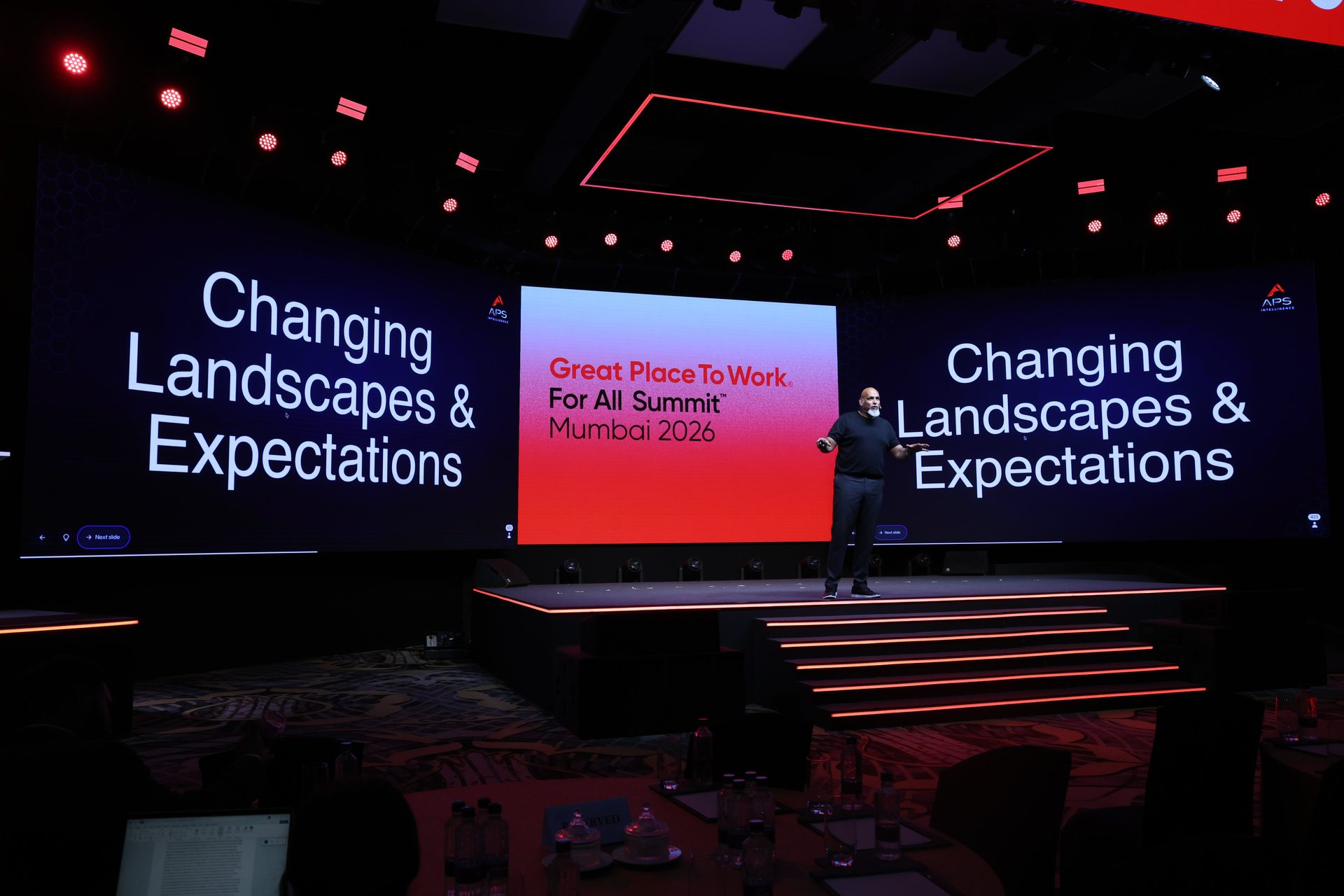
John precisely crafts speeches, grounded in behavioural science, to shift the frame through which leaders understand themselves, their teams, and their operating conditions, including practical tips for what to start doing tomorrow.

Learning and Development

We design and deliver tailored programmes that build capability where it is genuinely needed, drawing from our established evidence-based frameworks and shaped by your context.

Coaching

We work with individual executives and leadership teams at all levels, providing direct, evidence-informed challenge that leaders need to hear.

Advisory and Diagnostics

We work with boards, executive committees, and People functions to rigorously diagnose the true drivers of performance and culture, and define the precise interventions that materially improve outcomes.

Speaking

Speaking that holds the room

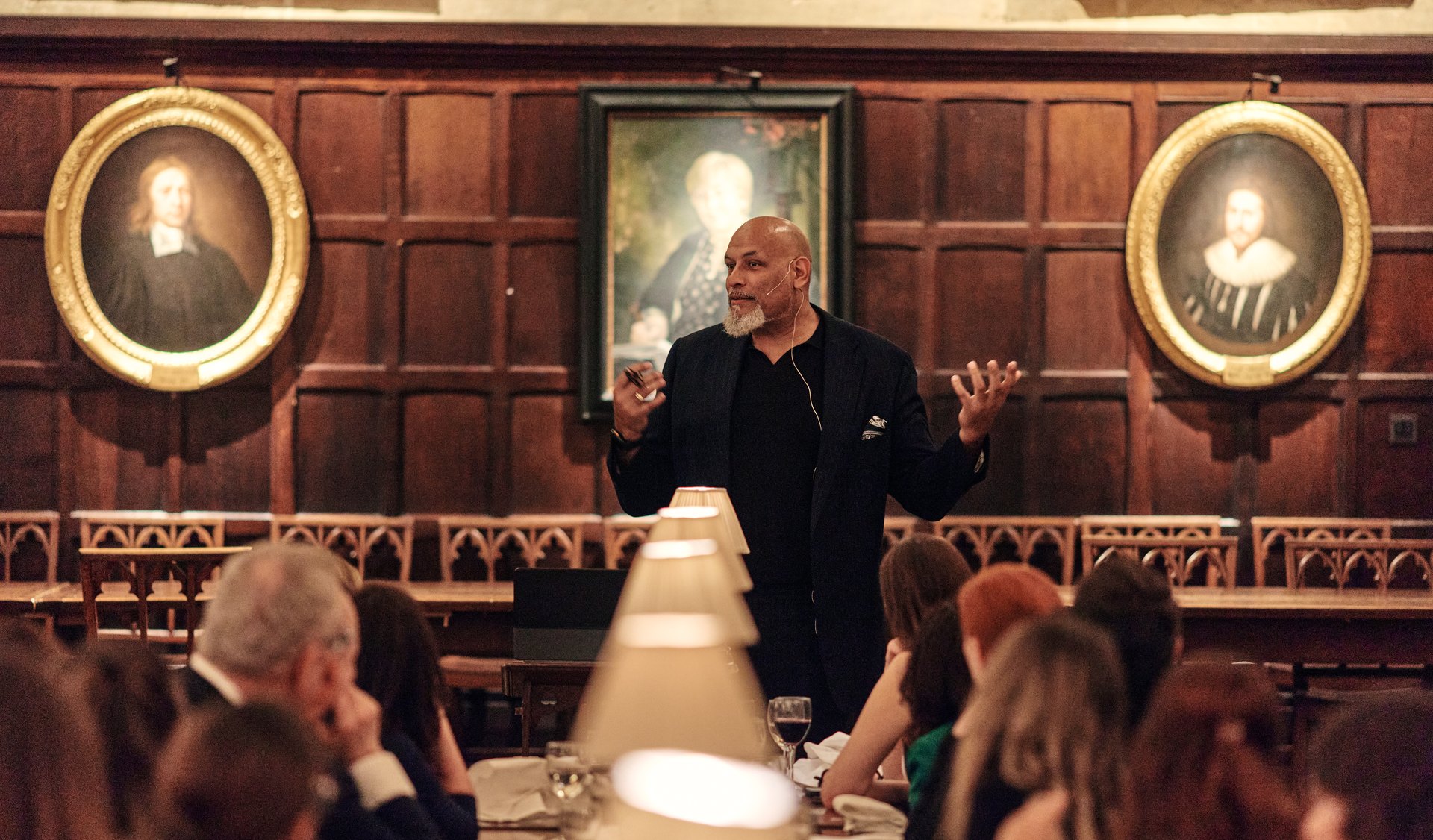
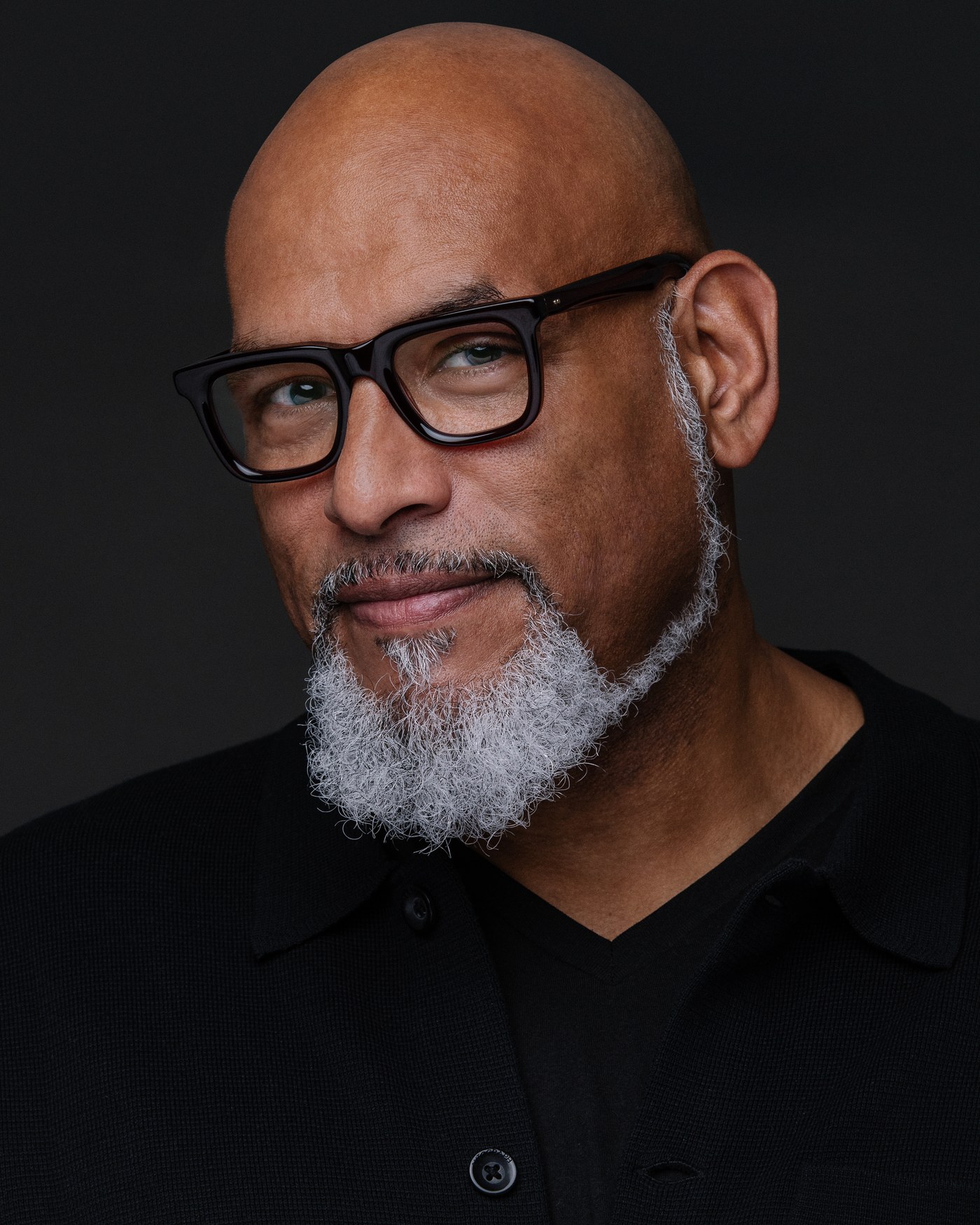
Professor John Amaechi OBE speaking with a headset microphone

Each session is precisely designed for your context.

Available as keynotes, masterclasses, or fireside conversations. Each is a precisely designed intervention grounded in behavioural science.

The Promises of Giants It's Not Magic Unlocking Elite Performance Leading through Permanent Disruption The Future is Human
Enquire About Speaking

Each session is a precisely designed intervention grounded in behavioural science. Available as keynotes, masterclasses, or fireside conversations.

Featured topics

The Promises of Giants

Leadership is a choice, not a title. Your choices change lives.

Every person in the room is already shaping someone's future, whether they intend to or not. This session challenges leaders to stop waiting for the conditions to be right and start making the choices that define the kind of leader they will be remembered as.

It's Not Magic

The difference between forgettable and indelible leadership isn't talent. It's practice.

The leaders who leave a lasting mark are not exceptional because of who they are. They are exceptional because of what they consistently do, and every behaviour that distinguishes them is learnable, practicable, and available to every leader in the room.

Unlocking Elite Performance

Not talent. Not luck. The specific conditions every high-performing team shares, and how to build them deliberately.

Underperforming teams are rarely short of talent. They are short of the specific conditions that allow talent to translate into results. Drawing on elite sport psychology and sixteen years of organisational practice, this session shows leaders exactly what those conditions are and how to build them.

Leading through Permanent Disruption

Why the most dangerous thing a leader can do right now is lead the way they always have.

AI transformation, geopolitical instability, shifting workforce expectations, and relentless organisational change have fundamentally altered the conditions in which leaders operate. This session gives leaders the frameworks and practical tools to make sharp decisions, build resilient teams, and sustain high performance when the ground will not stop moving.

The Future is Human

Why the organisations getting AI right are the ones investing hardest in their people.

Technology amplifies the habits and unacknowledged norms of the organisations it lands in. This session gives leaders the practical actions to integrate AI on a human scale, avoid scaling flaws it would otherwise expose, and maintain performance while the work is being rewritten.

For the full list of available speaking topics, get in touch with Dr Peter Carroll.

Schedule a Confidential Call with Dr Peter Carroll
In Their Own Words

What our clients say

We're cautious about what we claim on our own behalf. We'd rather you heard it from the people who have brought us into their organisations and measured what changed.

"John doesn't mince his words. He brings clarity, intellectual honesty and a deep commitment to getting to the root of an issue quickly. His ability to detect the beliefs sitting underneath what I was saying was extraordinary. His frameworks helped me translate reflection into practical behaviours."

Archana Mohan
Chief Operations and Technology Officer, Global Investment Management Firm

"Full five-star ratings across the board, and comments describing John as the most disruptive, provocative and engaging corporate speaker most had ever encountered."

Caroline Frankum
Global CEO, Profiles Division, Kantar

"John has an uncanny ability to ensure the key topics surface and are addressed. His approach enabled us to confront the conversations that were impeding our progress, while providing practical tools that immediately improved our collective leadership effectiveness."

Ilkka Paananen
CEO and Co-Founder, Supercell

"Since our initial work with John and the team, they have become a go-to support and resource for us as a business and as leaders. These interventions have allowed us to build genuine leadership capability."

Chief People Officer
Tesco

"The most transformative professional relationship I have had in my thirty-year career."

Andy Poppink  ·  CEO, Leasing Advisory EMEA and APAC, JLL
FAQ

Questions, answered

What causes high turnover in large organisations?

Pay matters less than people think, and exit interviews tell you less than you want to believe.

People rarely leave for the reason they put on the form. They leave because of what they experienced daily for months before they applied elsewhere: the manager who didn't hear them, the meeting where another voice ran over theirs, the promotion that went to someone less capable but more visible, the policy change that landed without explanation. Pay becomes the headline because it's the cleanest reason to give and the easiest one for HR to act on. The actual driver sits underneath.

Three things consistently predict whether someone stays: whether they have a direct manager who treats them like an adult and a professional, whether they can see how their work connects to something larger than the next deliverable, and whether the behaviour the organisation rewards matches the behaviour it says it values. When those three are present, people tolerate a lot. When any one of them breaks, the rest of the deal starts to feel transactional.

The manager layer carries most of this. Gallup's 2026 report puts global manager engagement at twenty-two per cent and falling. If your managers are exhausted, unsupported, and have less authority than their role demands, they can't deliver the daily experience that keeps people in. Turnover rises, and the response is usually to commission a survey, run a town hall, and add a benefit. None of it touches the layer that actually shapes the experience.

Reducing turnover starts with the manager layer, not with engagement scores, pulse surveys, or retention bonuses. The lever is the conditions, capacity, and skill of the people whose behaviour your workforce sees every day.

How do we fix a broken leadership team?

Define "broken" first. The label covers a lot of ground. The team might be stuck in analysis. Decisions don't always hold once the meeting ends. Members can perform for each other rather than work with each other. Some voices may have grown too loud while others have gone quiet. Decorum sometimes breaks down. The experience of being on the team can become unpleasant for those on it. The wrong people may be in the seats. Often, it's several of these layered together.

The first job is to get an accurate read, because an incorrect diagnosis leads to interventions that don't fit. An offsite about trust won't repair a team that needs role clarity, and a decision-rights workshop won't help a team where two voices have crowded out the others.

Most fixes don't depend on removing people, which is reassuring because most leaders don't have the political room to do that. The work APSI does with senior teams centres on three things. First, surfacing what's actually happening in the room (and after the room) so the team leader and the team can see the pattern they've been inside. Second, working with the individuals whose behaviour disproportionately shapes the climate, so their impact on the team becomes more constructive. Third, building habits and incorporating small mechanisms that hold the team's behaviour to the standard the team leader wants, without requiring constant policing.

Typically, the work is a blend of individual coaching and short, focused team interventions designed to shift specific dynamics. Occasionally, a single conversation, well-timed and well-witnessed, does more than an offsite ever could.

Clients tend to come away with something close to relief. The people they thought they couldn't change have changed. The team's climate has settled. The team they need is the team they actually have.

What's the difference between executive coaching and management training?

The honest answer is they solve different problems, and many organisations buy them in the wrong order.

Management training teaches you what to do. It assumes the manager is unaware of a tool, framework, or technique, and that giving them the technique will change their behaviour. For some skills (running a one-to-one, structuring a performance conversation, applying a feedback model) that's true. The manager learns the move, practises it, and over time it becomes a habit.

Executive coaching teaches you who you are when you do it. It assumes the leader knows what to do but isn't doing it consistently, or is doing it in a way that produces results they didn't intend. The work is about closing the gap between what you mean to do and what your people actually experience, so the moves you make match the outcomes you want.

Many leadership failures aren't knowledge failures. Your managers don't lack a framework. They lack the conditions, the time, and the backing from above to use what they already know.

The practical sequence APSI tends to recommend: coach the senior leadership team, to reshape the conditions the manager layer operates inside. That coaching can be done one-to-one, in a combination of one-to-one and small-group work, or with the whole senior leadership team. Next, train the manager layer in the techniques that those conditions can now sustain.

When working only with the manager layer, there's still a return. APSI's particular expertise is mitigating the downsides that occur when you ask managers to deploy good tools in an environment that isn't yet supporting them. We can shift behaviour, capability, and outcomes even when the senior layer isn't quite doing its part to optimise the conditions in which managers operate.

Organisational culture consulting vs internal HR teams: when is each right?

It isn't an either-or, and the best work happens when it's neither alone.

Internal HR carries the day-to-day machinery that no external partner can replicate: pay compliance, regulatory alignment, pension obligations, pay-gap reporting, performance management cycles, employee relations, and the deep institutional memory that comes from being there through previous reorganisations. They know the personalities, the stakeholders, and the policies that create the friction nobody wants to admit. For ongoing work, internal HR is the engine.

External consulting earns its place when the situation calls for distance, technical depth, or the kind of outside standing that internal teams can't provide. Distance helps because internal teams sometimes can't say what they see without consequence; the senior leader who declines a development conversation from their HR director will often hear the same point from an external coach and act on it. Depth helps because no internal team can carry expertise across executive coaching, organisational psychology, leadership development, and behavioural change at the level a board sometimes needs. Outside standing helps because some conversations require an outside voice for the message to land.

Where it goes wrong is when external consulting replaces internal HR rather than complementing it, or when HR treats an external partner as a threat rather than a co-worker on a problem they share. The relationship that produces the best outcomes is the one where the external work fits around what HR will keep doing after we leave.

That's the way APSI operates. We don't drop in, run a programme, and leave a binder. We work alongside HR throughout, transfer the knowledge as we go, and design the engagement so that capability, language, and tools become part of the organisation's normal run of business by the time we step back. The senior leaders we work with know what we did. The HR partners we work with can do it themselves the second time around.

How do we measure workplace culture improvements?

Surveys measure what people say. Culture is what people do. Those two things are rarely identical, which is why surveys are not the primary instrument for measuring cultural change.

There's a body of research that takes culture measurement seriously: Amy Edmondson on psychological safety, Chris Argyris on the gap between what organisations say they value and what they actually do (his distinction between espoused theory and theory-in-use), Elizabeth Morrison and Frances Milliken on the conditions that produce organisational silence. The gap between what happens and what's said is your real culture.

Look at your last round of promotions: did they reward people who upheld the stated values, or people who delivered results by breaking them? Look at the senior leaders retained after major incidents, and the policies routinely waived for the well-connected. Each tells you what the organisation truly tolerates.

Voice is another signal. In senior meetings, note who speaks, who interrupts whom, who takes credit for whose ideas, and which questions go unanswered. In town halls, notice whether the people who used to challenge things have gone quiet.

Survival is the sharpest test of all. The colleagues who raised difficult issues eighteen months ago: are they still here, still in equivalent roles? Pair that test with patterns in grievance and disciplinary records; concentration around specific managers or teams identifies localised problems that organisation-wide engagement averages will conceal.

Engagement scores have a place. They track large movements, enable team-to-team comparisons, and prompt structured conversations. Their limit is that they measure the temperature of saying, not of doing. Treat them as a starting point, not a conclusion.

Behavioural measurement is less tidy than a dashboard. It's also more honest.

How does APS Intelligence approach culture transformation?

Most consultancies start with "culture". We start with behaviour.

Culture is what leaders and people do, not what the company says it values. Adam Grant has quoted John Amaechi's line on this: "culture is defined by the worst behaviour tolerated". That framing tells you precisely where to intervene. If you want to change the culture, change the behaviour the senior layer tolerates, then change the behaviour the senior layer models, then build the conditions and skills that let the manager layer sustain the change.

In practice, that's three pieces of work, in different proportions for different clients. The first is executive coaching with the senior leadership team, individually and in combination, that focuses on the gap between what they intend and what their people experience. The second works with the manager layer, because that's where strategy meets daily reality and where most failure modes actually live. The third is the diagnostic and observation work that tells the senior team whether the changes are landing, in time to course-correct.

We tailor every engagement to the specific situation the client is in. No two clients are in the same situation, so no programme is cookie-cutter. We examine which behaviours are draining the most value, which leaders are either driving or buffering them, and what realistic change would look like over 12 to 24 months. That's faster than the typical timeline for behavioural change at organisational scale, and we partner with the organisation throughout to make the work as painless and rewarding as possible.

The thing we won't do is take on work that doesn't have a theory of change or a realistic mechanism to deliver a return on investment. We turn that work down even when it's fashionable, even when other firms are happily selling it. We won't tell a client we can deliver an outcome we can't actually deliver.

What do clients say about APS Intelligence?

The most useful answer is the named testimonials on this site, which include senior leaders at JLL, Tesco, Jefferies, Kantar, and Supercell. They detail the engagements they led, and we'd encourage you to read them rather than rely on a summary.

Three patterns emerge across the named testimonials and the wider set of confidential feedback we receive.

  1. We tend to surface a different problem than the one the engagement started with, and clients consistently describe the surfacing itself as the most useful part.
  2. The change tends to hold beyond the engagement, because we target specific situations leaders face repeatedly rather than abstract competencies.
  3. Clients name John Amaechi's directness often: he tells senior leaders what most of their advisors won't, but in a way they can hear and act on.

Confidentiality is a condition of trust, so many of the relationships that have produced the strongest outcomes go unnamed. The named testimonials on this site are a representative slice, not the full pattern.

Need a facilitator for your leadership offsite?

A leadership offsite is only worth the cost if it has an impact in the room that survives the journey back.

The most common request we see is from a chief executive or chief people officer who wants the senior team to leave with three things:

  • a sharper read on the actual problem they're facing (often different from the named problem on the agenda)
  • a set of decisions the team has actually made together, rather than rubber-stamped
  • a behavioural shift in how the team works with each other after the offsite ends

That last one is where most facilitation falls short. The energy of the offsite produces declarations that don't survive the diary returning to normal, but the return on investment is what changes after the room empties, not what feels good while it's full.

We facilitate UK and international offsites, in person and hybrid, ranging from half a day to three days, depending on what your team needs to leave with. We build sessions around the specific situation your leadership team is in; we do not deploy a standard framework.

To enquire, the fastest route is via the contact section on this page. We'll schedule a short conversation to scope the offsite and confirm its fit, before any commitment.

What does an APS Intelligence engagement cost?

Engagements are priced to the situation, so a fixed price list would mislead more than it would help.

APSI sits in the senior leadership advisory tier: the band where board-level coaching, senior team interventions, and behaviour change at scale live. The figure for any specific engagement depends on what layers of the organisation the work covers, the duration, and whether it's single-team or system-wide.

We explore specifics on a thirty-minute confidential call with Dr Peter Carroll. That's enough time to scope the question, propose a response, and evaluate whether the fit is there. We can then send a proposal outlining the fees. If we can't help, we'll say so and suggest someone who can.

+84
5-year NPS average
16
Years of practice
4
Continents of delivery
FTSE 100
Boards and global enterprise
About the Team

Three principals. One practice

Professor John Amaechi OBE, Founder
Founder

Professor John Amaechi OBE

Organisational psychologist, Professor of Leadership at the University of Exeter Business School, bestselling author, and adviser to FTSE 100 boards. Member of the Mayor of London's AI and Jobs Taskforce. Rigorous without being academic. Direct without being reductive.

Dr Peter Carroll, Chief Executive Officer
Chief Executive Officer

Dr Peter Carroll

Former surgeon and long-standing business leader. Peter brings the same diagnostic precision to organisational challenges that he applied in clinical practice: find the actual problem, not the presenting symptom, and intervene with the minimum effective dose.

Helen Russell, Chief of Staff
Chief of Staff

Helen Russell

Over twenty years supporting senior executives. Helen ensures every engagement is planned and delivered to an exceptional standard, and that the experience of working with APS Intelligence reflects the quality of the outcomes it produces.

John Amaechi OBE is an organisational psychologist, Professor of Leadership at the University of Exeter Business School, and founder of APS Intelligence Ltd. He completed his graduate training in psychology while playing professional basketball in the NBA, becoming in the process the first British person to reach that level of the sport. For sixteen years he has advised FTSE 100 boards and senior leadership teams across Europe, APAC and the Americas, and his work draws on behavioural science applied inside some of the world's most complex organisations. He is the author of three books on leadership, including the Sunday Times bestseller The Promises of Giants and It's Not Magic: The Ordinary Skills of Exceptional Leaders, and holds an OBE for services to sport and the voluntary sector. In 2026 he was appointed to the Mayor of London's AI and Jobs Taskforce, advising on workforce capability, role design, and the behavioural conditions that determine how organisations and their people adapt as technology reshapes work.

Chartered Psychologist, British Psychological Society Fellow, Association of Business Psychologists Fellow, Royal Society for Public Health Companion Chartered Manager, Chartered Management Institute Chartered Fellow, Chartered Institute of Personnel and Development Chartered Scientist, Science Council
The Ideas Behind the Practice

Our latest books on leadership

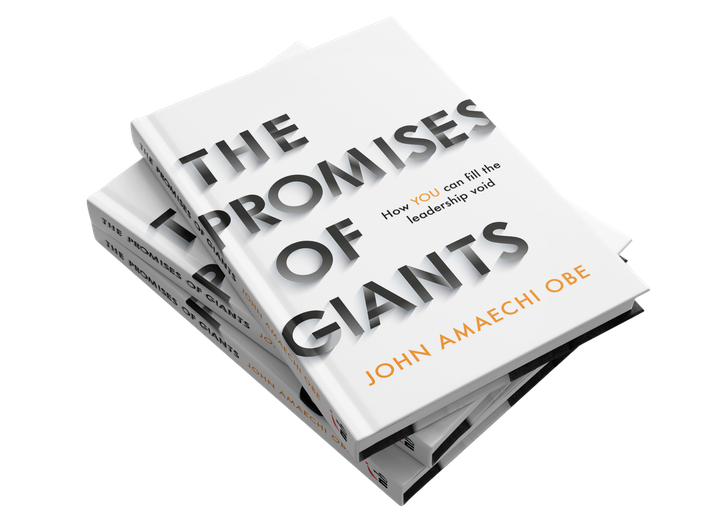
The Promises of Giants by John Amaechi

The Promises of Giants

Sunday Times bestseller

The Promises of Giants is a challenge to anyone who wants to change things for the better. It shares practical strategies to empower you to maximise your own potential, inspire others, and recognise that you, too, are a giant, because everyone is a giant to someone.

"This is one of the most powerful books ever written about leadership."

Adam Grant
Wharton Professor, #1 New York Times bestselling author and the host of the TED podcast WorkLife.

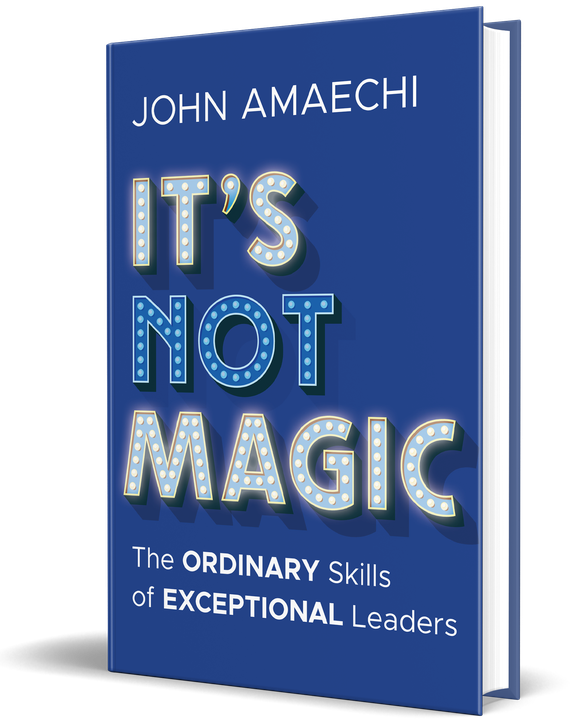
It's Not Magic

The Ordinary Skills of Exceptional Leaders

This book is a powerful new discussion of the straightforward, everyday behaviours that separate the world's best leaders from the rest. The book offers easy-to-follow explanations you can start modelling today to transform your ability to lead people.

"Riveting and important. By expertly and often beautifully demystifying self-awareness and self-improvement, Amaechi makes them superpowers within all our reach."

James O'Brien
Broadcaster and writer.
It's Not Magic by John Amaechi
Contact

Start the conversation

If this describes something your organisation needs, the next step is a conversation with Dr Peter Carroll. Thirty minutes is usually enough to determine how we can help. If we can't, we'll tell you, and suggest someone who can.